

- SATURDAY, FEBRUARY 21, 2026
- 3.30 PM ONWARDS
- CEC, HINDU TEMPLE OF ST.LOUIS, MO.
SANGAM – A Path of Oneness is a cultural celebration presented by SLICA that showcases the linguistic diversity and rich traditions of India in St. Louis. Bringing together over twelve Indian language and cultural schools from the St. Louis region, this event unites educators and students on one stage to celebrate how India’s languages and traditions continue to thrive far from home. Through collaboration and performance, SANGAM fosters cultural understanding, community unity, and inspiration for future generations.
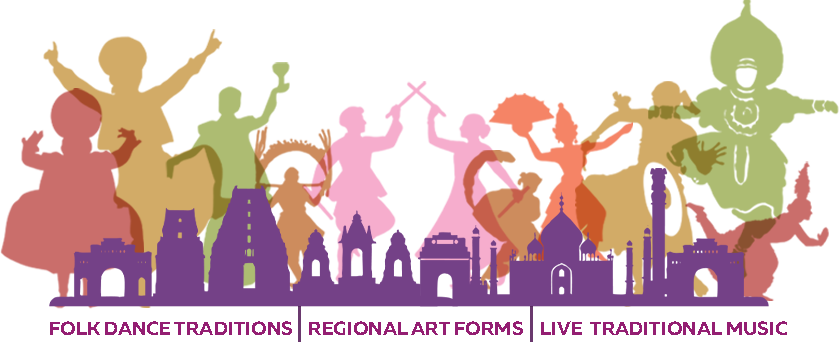
Experience the grace and beauty of traditional folk dances from various regions of India, performed by talented artists from our community.
Immerse yourself in the soulful melodies of Indian classical and folk music performed live by accomplished musicians.
Discover the diverse artistic expressions from across India through carefully curated showcases of regional art forms.
The Hindu Temple of St. Louis, MO 715 Weidman Rd, Ballwin, MO 63011
Saturday, February 21, 2026
Registration Start 3:30 PM onwards - Event Start 4:00 PM
Join us for an unforgettable evening celebrating the unity and diversity of Indian culture.
Our success as a cultural organization is made possible by the generous support of individuals, families, and organizations who believe in the value of celebrating the rich and diverse heritage of India and building community you live in. Your contributions help us bring meaningful cultural experiences to life - uniting the Indian diaspora and enriching the broader St. Louis and Midwestern community. Thanks to your generosity, SLICA continues to offer programs and events that are open and accessible to all. We are deeply grateful for your partnership in helping us preserve traditions, connect generations, and promote cultural understanding.




As a nonprofit, we rely on your generosity to keep our programs free and accessible to all. Every contribution—big or small—makes a lasting impact. Donate today and help us build a stronger, more connected community.
Registrations and donations are powered by FeatsClub, our trusted digital partner.Bengali, also known by its endonym Bangla, is a classical language primarily spoken by the Bengali people native to the Bengal region, which includes India West Bengal, Tripura, parts of southern Assam, and Bangladesh. With over 242 million native speakers and an additional 43 million second language speakers as of 2025, Bengali is the seventh most spoken language in the world. Jana Gana Mana, the national anthem of the Republic of India, was originally composed in Bengali by the country first Nobel laureate, Rabindranath Tagore.
St. Louis Bangla Bidyaloy
St. Louis Bangla Bidyaloy, or St. Louis Bengali School, nurtures the Bengali language and heritage through creative arts and cultural expression in the St. Louis region. By integrating music, dance, drama, storytelling, and visual arts into learning, the school helps students connect deeply with Bengali literature, history, and traditions. This artistic approach inspires creativity, cultural pride, and a lifelong love for the Bengali language.
Gujarati is an Indo Aryan language native to the Indian state of Gujarat and spoken predominantly by the Gujarati people. It is the official language of Gujarat and the union territory of Dadra and Nagar Haveli and Daman and Diu. Gujarati is one of the most widely dispersed Indian languages outside its home state, carried across the world by dynamic and successful Gujarati communities. Within South Asia, it is commonly spoken in major cities such as Mumbai and Karachi. In North America, Gujarati is among the fastest growing Indian languages, particularly in New Jersey, New York City, and across Canada. In Europe, especially in the United Kingdom, Gujarati is one of the most widely spoken South Asian languages and is notably the fourth most commonly spoken language in London. The language also has a strong presence in East and Southeast Africa including Kenya, Tanzania, Uganda, Zambia, and South Africa, and continues to be spoken in global regions such as Hong Kong, Singapore, Australia, Bahrain, and the United Arab Emirates.
Bal Vihar of St. Louis
At Sangam, Gujarati is represented by the students of the Center for Indian Cultural Education, Bal Vihar of St. Louis. Founded in September 1992 at the Mahatma Gandhi Center, Bal Vihar was officially established as a 501(c)(3) nonprofit organization on March 31, 2005. The organization strives to foster and preserve Asian Indian cultural values among children ages 5 through 18 and to provide an encouraging environment through activities led by dedicated volunteers. Each year, more than 350 children enroll, and many continue from age 5 until they graduate at age 18. More than 2,000 students have graduated from Bal Vihar, with many going on to become accomplished professionals in medicine, engineering, and artificial intelligence. Many alumni who remain in the St. Louis community now bring their own children to Bal Vihar. High school students at Bal Vihar collaborate with institutions including the St. Louis Science Center, the Art Museum, the Magic House, and area hospitals to participate in interfaith and educational projects. The community takes great pride in its volunteers, several of whom have received certificates of appreciation from the Rockwood School District.
Hindi is an Indian language written in the Devanagari script. It serves as the lingua franca for much of northern India. Hindi is an official language in ten states and six union territories of India. Hindi is the third most spoken language in the world.
HindiUSA Saint Louis
HindiUSA Saint Louis is an official school of Hindi USA, a registered nonprofit 501(c)(3) organization. Since 2018, the school has grown from 22 students and 5 teachers to more than 100 students with 20 teachers in Saint Louis, Missouri. The school uses many creative methods to spread knowledge of the Hindi language among children aged 5 and above in and around the Saint Louis area, while also helping students learn about Indian history and culture.
Kannada, a language spoken predominantly in the state of Karnataka in southwestern India, was once the court language of several major dynasties and empires of South and Central India. Kannada literature has been honored with eight Jnanpith Awards, the second highest number for any Indian language.
St. Louis Kannada School
St. Louis Kannada School is a nonprofit community initiative dedicated to nurturing the Kannada language and culture among children in the Midwest. Having operated for more than 20 years as an unofficial volunteer driven program, the school officially obtained registered status in 2025. It is affiliated with Taynudi and serves as the organization home base.
The school currently serves 18 enthusiastic students, guided by 8 committed teachers. It provides a well-rounded cultural introduction to Kannada and Karnataka. In addition to language instruction, the school arts wing has extended to teaching folk instruments and dance forms. Classes are conducted at the Cultural Center of the Hindu Temple, offering a vibrant and culturally grounded learning environment.
Malayalam, a language primarily spoken by the Malayali people of India, is native to the Indian state of Kerala and the union territories of Lakshadweep and Puducherry, specifically the Mahe district. It is also spoken by linguistic minorities in neighboring states, with significant numbers of speakers in the Kodagu and Dakshina Kannada districts of Karnataka, as well as in the Kanyakumari, Coimbatore, and Nilgiris districts of Tamil Nadu. In addition, Malayalam is widely spoken by the Malayali diaspora, especially in the Persian Gulf countries.

Malayalam School of Saint Louis
Malayalam School of Saint Louis, an Ohmkaram affiliated program, began in 2006 and will celebrate its 20th anniversary in May 2026. More than 500 students have attended the school over the years. With a dedicated team of teachers, the school curriculum has strengthened significantly over time. Since 2018, the Malayalam School of Saint Louis has been a registered center for Malayalam Mission, Department of Cultural Affairs, Government of Kerala. Two senior batch students have completed the Kanikonna certificate course from the Malayalam Mission. Classes are conducted online on a weekly basis.
STLMA Malayalam School
Padippura St. Louis Malayalam School, another Malayalam school in the region, began its operations on March 9, 2024. The school is accredited under Malayalam Mission an initiative of the Government of Kerala aimed at promoting the Malayalam language globally. This is its third year since official registration , and the school currently has around 50 students and 10 teachers across 5 divisions.
Marathi is a classical language predominantly spoken by the Marathi people in the Indian state of Maharashtra. It is also spoken in Goa and in parts of Gujarat, Karnataka, and the union territories of Dadra and Nagar Haveli and Daman and Diu.
Saint Louis Marathi Shala
St. Louis Marathi School has been operating under the Marathi Mandal for the past 15 years. All Marathi schools in the United States are supported by the Bruhan Maharashtra Mandal, a nonprofit organization. Since last year, the school has been following the Balbharati curriculum prescribed by the Government of Maharashtra. Currently, six teachers teach at the school. All teachers are volunteers who generously contribute their time and effort. They work wholeheartedly toward the mission of preserving and promoting the Marathi language and culture for future generations.
Manipuri, also known as Meiteilon, is the lingua franca of Manipur in Northeast India. The culture is famous for Manipuri dance, Ras Lila performances, indigenous martial arts like Thang-Ta, and the unique Lai Haraoba festival.
St. Louis Bangla Bidyaloy
St. Louis Bangla Bidyaloy represents the rich traditions of Manipur
Odia, one of India's classical languages, is the pride of Odisha with a literary tradition over 1,000 years old. The culture celebrates Odissi dance, Puri's Jagannath Rath Yatra, Pattachitra art, and rich temple architecture.
St. Louis Bangla Bidyaloy
St. Louis Bangla Bidyaloy promotes Odia language and Odisha's cultural heritage
Punjabi, written in the Gurmukhi script, is the language of Punjab's vibrant culture. Known for Bhangra and Gidda dances, Baisakhi celebrations, rich Sufi poetry, and the warmth of Punjabi hospitality and cuisine.
Bal Vihar of St. Louis
Bal Vihar of St. Louis promotes Punjabi language and celebrates Punjab's rich heritage through Bhangra performances, Lohri and Baisakhi festivals, and programs connecting families to their roots
Sanskrit, the ancient language of the Vedas, is the mother of many Indian languages. It holds treasures of philosophy, science, mathematics, and literature including the Mahabharata, Ramayana, and Upanishads.
Goloka Children school - Iskcon St Louis
Goloka Children School – ISKCON St. Louis offers instruction in the classical language of ancient India, Sanskrit, along with Vedic chanting, shloka recitation, the study of classical texts and scriptures, cultural arts and crafts, yoga and meditation, and devotional music through kirtans and bhajans.
Tamil, one of the oldest surviving classical languages in the world, has been attested since 300 BCE. It is the official language of the state of Tamil Nadu and the union territory of Puducherry in India. It is also one of the official languages of Sri Lanka, Malaysia, and Singapore. Tamil speaking diaspora communities exist in many countries across the world.
Missouri Tamil School
Missouri Tamil School has been teaching children in the St. Louis region for more than 35 years. The school takes immense pride in its rich heritage and remains deeply committed to carrying it forward to the next generation. As a Cognia accredited institution, Missouri Tamil School upholds high standards in both language education and cultural learning.
Today, the school serves more than 300 students, supported by over 100 dedicated adult volunteers and 35 youth volunteers. More than 20 students who graduated from Missouri Tamil School have earned World Language credit in Tamil through their public school districts and have been awarded the prestigious Missouri Seal of Biliteracy. Youth volunteers at the school also qualify for the Presidential Volunteer Service Award, recognizing their commitment and service to the community.
Telugu is a language native to the Indian states of Andhra Pradesh and Telangana, where it is also the official language. It is often called the Italian of the East because of its melodic and vowel rich sound.
SiliconAndhra ManaBadi
Manabadi Telugu Language School, an initiative of SiliconAndhra, was launched a decade ago in St. Louis. It is a volunteer driven program dedicated to preserving and promoting Telugu language and culture. The program is affiliated with Potti Sreeramulu Telugu University and is accredited by ACS WASC.
The school operates two centers in the St. Louis area, located in Ballwin and O Fallon, and teaches more than 180 students. Manabadi emphasizes reading, writing, listening, and speaking in Telugu, helping children build a strong cultural identity, confidence, and connection to their heritage. By fostering multilingual skills and critical thinking, the program prepares children for global opportunities while nurturing pride in their mother tongue.
Watch our special invitation messages from SANGAM 2026
The St. Louis Indian Cultural Association (SLICA) is a nonprofit organization committed to celebrating, preserving, and promoting the diverse cultural heritage of India in the heart of the Midwest.
© 2025 St. Louis Indian Cultural Association (SLICA). All rights reserved.